
Until very recently, SEO (Search Engine Optimization) was the king channel for most businesses to drive traffic, leads, and brand visibility at a scalable cost/sale through organic rankings. But with the rise of ChatGPT and the new wave of AIs, the digital acquisition landscape has been transformed. Google itself has changed how “search” works, shifting from classic SERPs to Gemini’s AI Overviews (SGE). At the same time, millions of users no longer “Google it” but instead ask ChatGPT, Gemini, or Perplexity for direct answers—getting immediate, synthesized responses, often at the expense of traditional clicks.
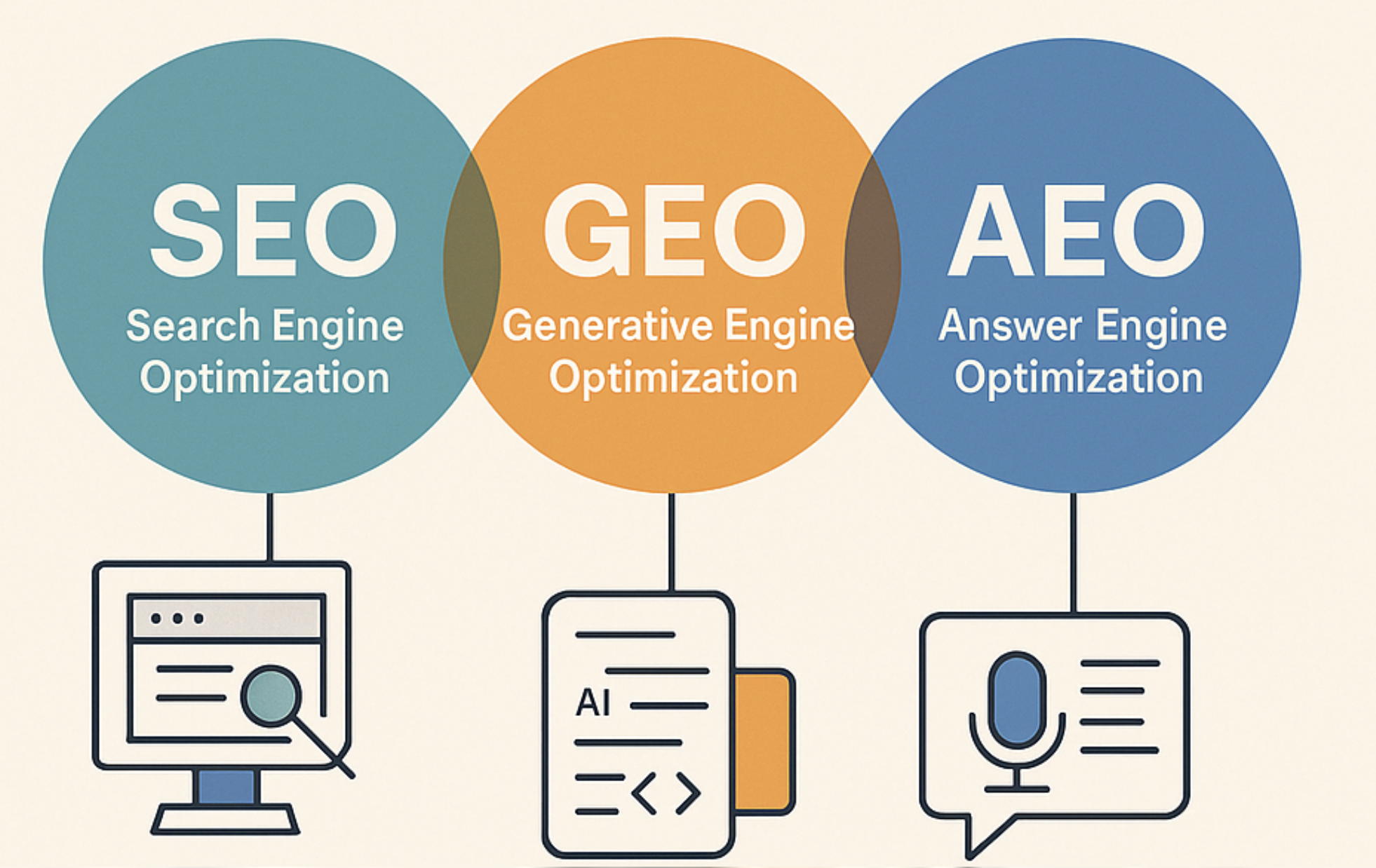
The Consequence for Digital Businesses.
If you are running a digital business or digital marketing channels are key to your regular income, this isn’t a minor shift. AI Overviews are estimated to generate organic traffic reduction by 15%–60%, depending on the industry and query type as this Forbes article ‘How AI Search Is Draining Your Traffic‘ . Organic visits fell from over 2.3B to under 1.7B in a single year, while zero-click searches jumped from 56% to 69% (Wikipedia). Smaller sites without strong domain authority are often hit the hardest. Some examples of must-read articles anybody interested on the topic should go for:
- MailOnline saw CTRs plunge by 56% even when ranking #1 as detailed on ‘New data: Google AI Overviews are hurting click-through rates’ from Search Engine Land.
- According to Search Engine Land, informational queries featuring AI Overviews report CTR drops of 15–35% (from the same Search Engine Land article).
- E-commerce brands reports how different eCommerce sites owners have seen overnight 40% traffic losses when AI answers replaced traditional clicks on a bit pessimistic article from Passionfruit ‘Your E-commerce Site is About to Go Invisible. The Fix is Generative Engine Optimization.‘, but that I do encourage to go through as it explains very well why the traditional keywords strategies are dead since AI’s do not match keywords but understands its intent.
What about if I am a publisher, how Big Is the Impact?
According to the latest NY Post report, News publishers lost over 600M visits a year. If you have a publisher or work in one, this article is also a must-have. ‘Media Google AI summaries increase frequency of ‘zero clicks’ to search results, sinking traffic to news sites‘, where it is explained how people are starting to stop visiting blogs or newspapers to find information in articles but ask AI’s where the info is, and a much faster pace than expected.
AI is already generating a huge impact on publishers, advertising networks and digital marketing channels in general, since a large amount of the WWW traffic will be absorbed by AIs…. and this is just the beginning!
- CTR on position #1 listings can drop 34–35% when AI Overviews appear (Ahrefs/Amsive).
- Non-branded queries lose nearly 20% more traffic (Amsive).
- 42% of shoppers already use generative AI for purchase guidance harming specialised media and even influencers according to the Wall Street Journal, in another article that woos markets – AI Has Upended the Search Game. Marketers Are Scrambling to Catch Up.
- 60% of queries generate no click at all, brutal stat raised by Bain that confirms how zero clicks search is going to redefine digital marketing
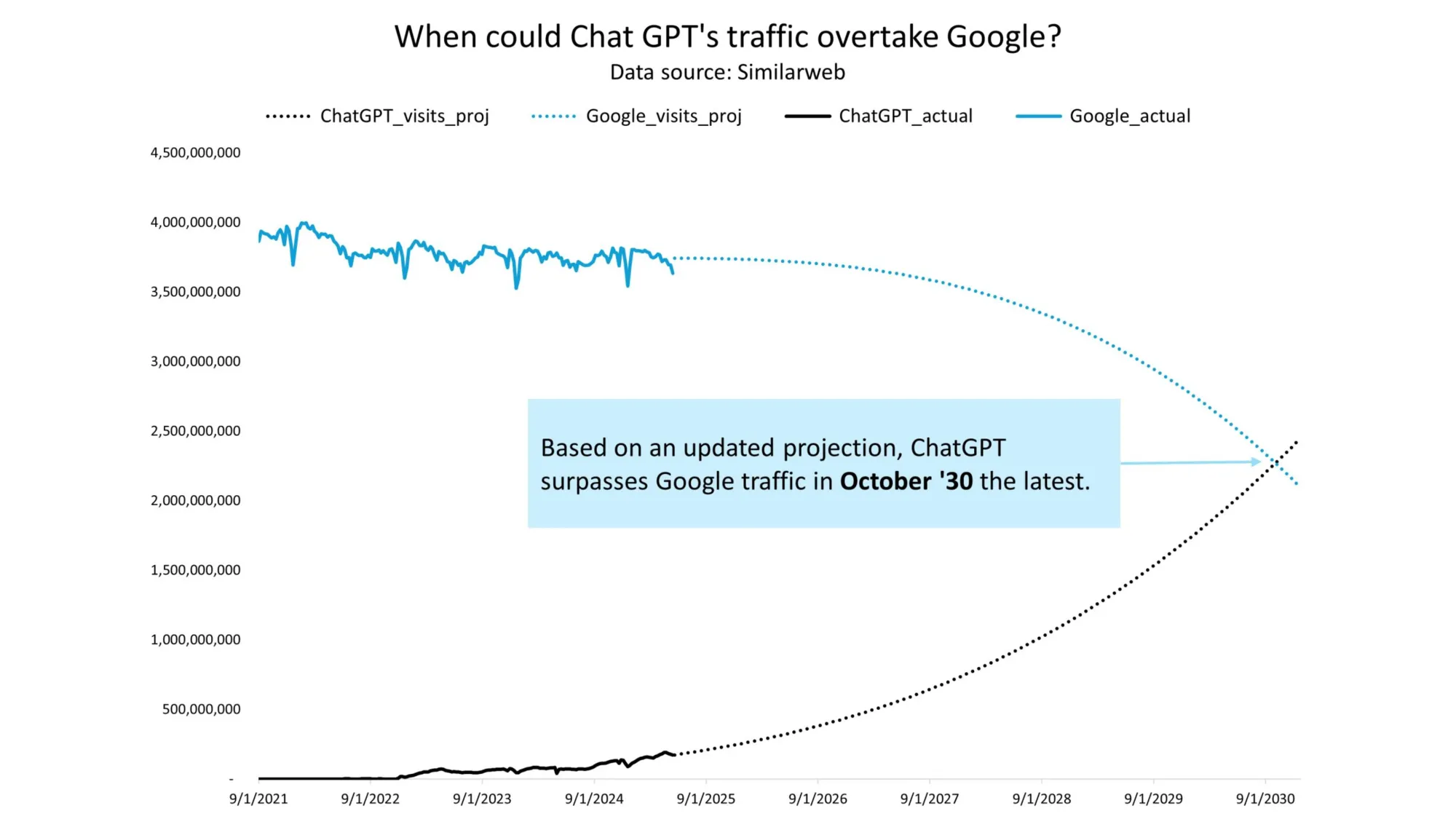
How long will we need to wait? Not much! According to Similar Web, we may have already seen the maximum volume of traffic in the internet and visits may be decreasing in favor of AI searches, which may meet by (or even before) 2030.
Ok, But What Does GEO Mean? And What Are AEO, LLMO and All These New Terms?
This sounds exciting and perhaps a bit scary, but let’s take a step back and be sure we understand the key concepts of these revolutions:
- SEO: It is the process that aims to optimise content to rank a page or a site as higher as possible in traditional search results via keywords, backlinks, and technical performance.
- GEO (Generative Engine Optimization): process or strategy of optimizing digital content specifically for generative AI engines and platforms like ChatGPT, Google Gemini, and Microsoft Copilot. Unlike traditional SEO, which focuses on getting clicks by ranking on a SERP, the goal of GEO is to have your content be the source that a generative AI selects and cites directly in its answer to a user’s query.
- AEO (Answer Engine Optimisation): AEO is the practice of creating and optimising content to be easily found and used by “answer engines,” which are search tools or AI systems designed to provide direct answers to user questions rather than a list of links. AEO is about being the “answer” rather than just a “link” in the search results. I guess each marketer would have its own opinion, but to me at least, AEO is an activity, perhaps the most important one, among your GEO strategy activities.
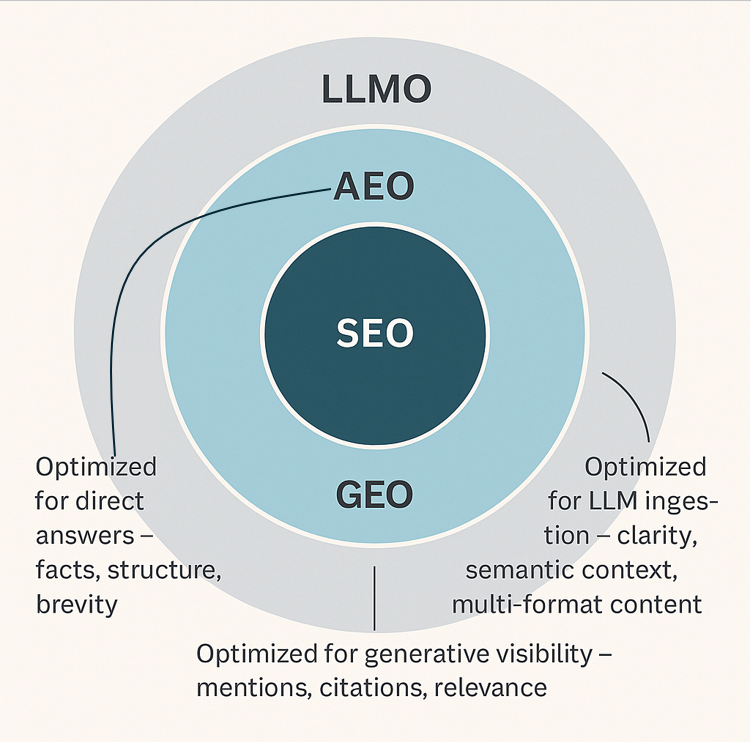
- LLMO (Large Language Model Optimisation): If we place these terms as onion layers, LLMO will be the larger one, in which we keep all the GEO/AEO and SEO features and we emphasise optimisation specifically for LLMs as Rajiv Gopinath visualised it in his recent article: Decoding AEO/GEO and LLMO and visualises with the chart below.
Overall we can say SEO is the art and science of improving your website’s self-earned visibility in traditional search engine result pages—think Google, Bing, and others. It involves keyword strategy that are appealing to your target audience and generate enough volume of clicks, backlinks from third parties to your site, technical health to ensure your content is searchable, and user experience optimization to ensure Google considers you as a legit site. Whereas GEO (Generative Engine Optimization) refers to the strategy of optimizing digital content specifically for generative AI engines and platforms like ChatGPT, Google Gemini, and Microsoft Copilot. Unlike traditional SEO, which focuses on getting clicks by ranking on a SERP, the goal of GEO is to have your content be the source that a generative AI selects and cites directly in its answer to a user’s query. This is especially important in a world where AI-powered searches may provide a synthesized answer directly, without the user ever clicking through to a website.
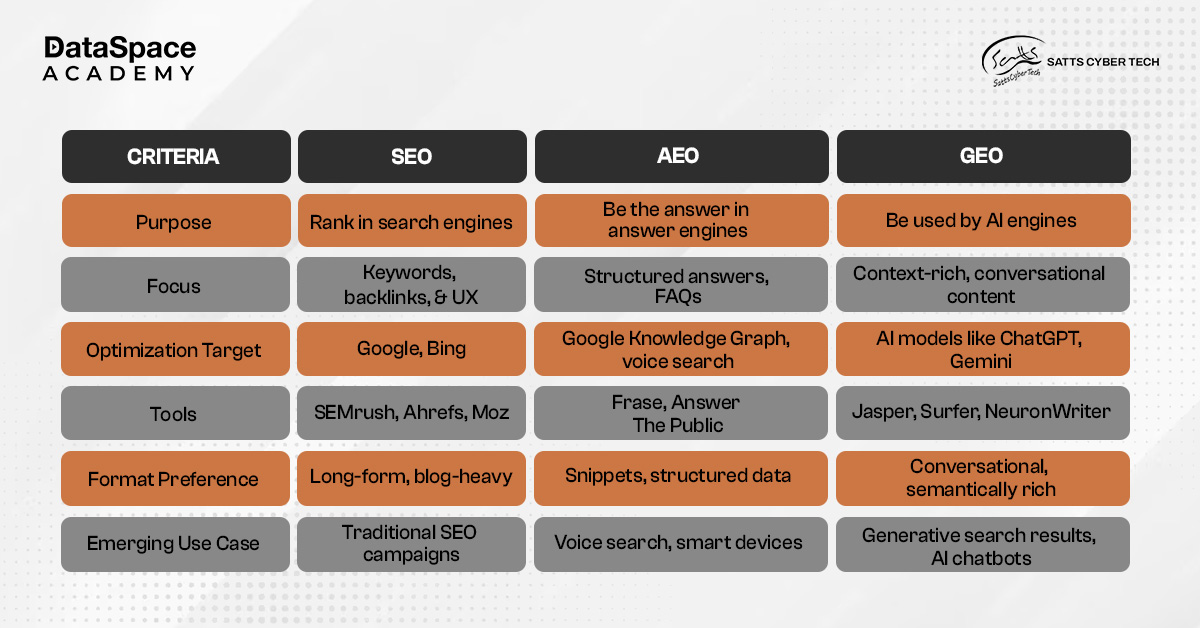
This summary from DataSpace academy can be a good take away:
So, does it mean that GEO/LLMO/AEO will or has already killed SEO?
Not at all, these three new kids on the block build on SEO fundamentals: While they have different goals, these new optimization strategies don’t really replace SEO. It is true that it will diminish its power but since they are built on core SEO principles we can see them like an evolution of SEO. For example, domain authority will still be important for both SEO and GEO for the search engines or AIs to know which publisher is more trustworthy and technical SEO (like site performance and structured data) remains crucial because it helps AI models crawl and understand your content, however backlinks and keywords analysis may lose relevance. Overall the difference is the focus: SEO is for humans and bots to find your site, while GEO/AEO/LLMO is for AI to summarize your site for your prospects and customers.
This Still Looks Really Bad. I spent a lot of time and effort on my SEO channel, is Everything Ahead Dark?
Not at 100%. SEO + GEO together can still unlock a massive opportunity, what you need to understand is that traditional SEO only is dead. Businesses that adapt early will enjoy higher trust and authority. AI is becoming the front door to the internet; being cited there gives you influence far beyond what clicks alone ever did. The upside? Faster customer acquisition, higher conversion, and a seat at the table of how AI engines “think.” People will still visit sites but prospects will likely take the first one or two steps of the search, leaving Website visits for users that are more advanced on the sales customer journey, in other words, SEO traffic volumes may decrease, but overall conversion rates could increase… this is based on my own experience and site traffic…. however ultimately time will say…. 🙂
Some example of those positive synergies can already be found: Standout Brand – Airbnb – Its “Neighborhood Guides” consistently rank high in SERPs and are frequently referenced in AI travel summaries, positioning Airbnb as a good example of GEO+SEO synergies
| Strategy | SEO | GEO/AEO |
|---|---|---|
| Goal | Rank webpages in SERPs | Earn citations in AI answers |
| Tactics | Keywords, backlinks, UX, schema | FAQs, structured data, lists, authoritative tone |
| Outcome | Organic traffic growth | AI-driven visibility & conversions |
| Value | Clicks | Trust, brand recall, sales |
Measuring AI Impact & ROI
We are all familiar with the key indicators of SEO and other Digital Marketing channels (if not, check this article with the key metrics of the industry) and we should be adding a few more to our list:
- AI Citation Rate – how often AI mentions your content / site.
- AI Referral Volume – visits from AI sources (ChatGPT, Gemini). This video explains it very, very well https://www.youtube.com/watch?v=CywCLvPmGDc
- AI Conversion Rate Comparison – for a given business goal (lead, sale, renewal), check the % of users that came from AI traffic vs. SERP traffic or other channels and completed that goal.
- AI Engagement Metrics – differentiate session length and depth from AI users compared to SERP.
- AI Revenue Attribution – tracking AI-driven leads/sales.
If you are hands on, there is no time to lose! Here’s your first action plan to blend SEO with AI-era marketing:
- Strengthen SEO foundations: technical SEO, keyword strategy, mobile speed, UX. Without this, GEO won’t stick.
- Restructure for GEO/AEO: Review your FAQs, schema markup, conversational formatting, bullet lists. Write content in “answer mode. Ensure you capture everything your users ask and do not worry about text length, AIs can process as much text as you want! Ensure you have FAQs for your brand, each of your products and services”
- Blend classic digital marketing: support with paid search, email nurture, and social proof. Use these channels to amplify AI-optimized assets.
- Feed the LLMs: Publish high-authority, evergreen content that AI wants to cite. Include stats, definitions, and unique perspectives. AIs will act as Search Engines, they will keep scanning for new content all the time, everywhere.
- Measure smartly: Go beyond “rankings.” Track citations, referrals, conversions, and long-tail visibility in AI.
- Iterate continuously: AI models evolve quickly. Refresh and re-optimize content quarterly, not yearly.
- Think omnichannel: Pair SEO/GEO with influencer mentions, podcasts, and social signals—elements AI increasingly ingests to assess authority.
To conclude, do not think of SEO vs GEO as a choice. Think of them as a blend of traditional digital marketing and AI-era optimization. Those who adapt fastest will own visibility in both blue links and AI answers!
References
Moz: Generative Engine Optimization, LLMO and AEO explained — [Moz blog on generative engine optimization][turn0search9].
Ahrefs: “GEO is just SEO” — highlighting synergy and overlap — [Ahrefs blog][https://ahrefs.com/blog/geo-is-just-seo].
SEMrush: Deep dive into why GEO matters now — [Semrush blog][https://www.semrush.com/blog/generative-engine-optimization/].
Single Grain: GEO case study with 32% of SQLs and 800% traffic growth — [Single Grain GEO case studies][turn0search1].
a16z: GEO as system of record for LLM presence — [a16z article][turn0search3].
Writesonic: Detailed GEO guide — [Writesonic guide][turn0search5].
GloryWebs: SEO success stories including Airbnb — [GloryWebs SEO case studies][turn0search6].
Medium: Decoding AEO, GEO, and LLMO: The New Playbook for AI-Era Visibility
 A Digital Marketing and Crypto Blog