
Digital marketers often refer to the marketing funnel by different names, such as the purchasing funnel or sales funnel. Regardless of the terminology used, this tool is essential in any marketing plan as it helps define user journeys and connect marketing and sales activities. (Wikipedia definition for reference),
Defining the Marketing Funnel
According to YourBusiness, a marketing funnel is a system that tracks the stages consumers travel through to reach a buying or target decision. In other words, it maps out the user journey along your marketing and sales process. Understanding the marketing funnel and its different stages is crucial for effectively monitoring and optimizing your campaigns.
Below we are consolidating some of the most common funnels, drafting a list of general steps for each of them and adding some comments about the Digital Transformation challenges Digital Marketers and Analytics teams may face on ROI tracking and monitoring activities
Different Industries, Different Funnels
Funnels vary across industries based on the purchase decision process and the available user journeys. Each industry and market has its specific funnel, which affects the costs and conversion rates at each stage. It is important for digital marketers to understand these funnels to connect traffic to specific actions, monitor performance, and define optimization processes.
On this list we are presenting a first list of the most common journeys we will face. Each industry and market have different number of steps which will affect the costs (CPI, CPC, CPA) and to the conversion rates along the journey.
Let’s Explore Some Digital Marketing Funnels Across Different Industries
- Leads generation and Online to offline funnels
Education, construction, automobile, health and care, financial services and other high-value service industries often utilize online-offline funnels that generate leads, specially in B2B businesses. The key step in these funnels is how to convert engagements into leads at a profitable price. Digital marketing goals usually revolve around driving traffic to specific landing pages through content, competitions, discounts or white papers in order to pipe those users into registrations or leads. To optimize these funnels, consider leveraging lead tracking and management systems, to be able to map new sales to the sales channel that generated it. If you are able to track the piece of content that generated the engagement, you will be able to generate insights that can be used by your content development team to optimise CTA and improve your branding campaigns support to sales. You can learn more about attribution on this other article – Attribution, a key concept (…).
Education, construction, automobile, health & care and other high value services industries that require consulting tend to use this funnel, where “leads generation” is the key step. You may find this funnel labelled as D2D (direct to distribution).
-
- The digital marketing goals is usually to generate registrations (leads) by driving traffic (impressions + clicks) to specific landing pages
- The leads database is transferred to distribution teams (sales departments, partners) generally via CRM/ERP. The distribution teams may receive these leads in specific Aps or back-end systems.
- Teams in charge of manage leads (Telesales dept, Agents or re-sellers) will try to arrange consultation meetings (can be online but offline are more popular). CRM-ERP should be used to track the number of calls, lead status, etc.
- Ideally the systems in charge of handling the leads to the Sales Team should send back the management info to the CRM/ERP for monitoring processes.
- Afterwards, users can be re-approached with re-targeting campaigns through different channels: SMS or E-Mail marketing, etc..
Example: The education industry in Thailand and Vietnam has an average CPL – cost per lead (user registration) of 8 – 6 USD and an average CR of 3% to 10% depending of the channels.

Digital Transformation effort to track & optimize: These funnels are perhaps the hardest one to monitor and track ROI (Return on investment) since require the consolidation of off-line & online data sources. Moreover, we will require to ‘capture’ and ‘carry out’ IDs from our external touchpoints when the lead or interest confirmation is submitted in our touchpoint.
Those business that have to differentiate among their customers VS non-customers for compliance purposes – financial industry players (Banks, Insurances, …) will need to add another layer of complexity.
2. Brand support focused funnels: Online and one way communication funnels.
A large amount of companies focus their Marketing activities on promoting their brands only, since final sales are outsourced to other retailers. This is a very typical example of Fast Movement Consumer Goods (FMCG) companies (like Unilever, Coca-Cola, Nestlé, Heineken), Apparel (Nike,….), Film Industry (Paramount, Universal), etc, Their key characteristic is that they do not have their own point of sales and rely on third party retailers (shops, cinemas, …) their campaigns often focus on branding only: generating impressions and engagement without unit sales targets. These funnels rely heavily on captivating content, influencers, targeted communication plans and trends adoptions, to generate demand and push customers to locate the closest retailer they can find. Tracking these funnels is relatively simpler since sales tracking is rarely required. If it is, the mother company will have to integrate with their retailers, which is becoming more and more common. In overall for this funnel:
-
- Marketing plans are based mostly on communication plans to introduce products, trends or promotions.
- On-line communication materials that use influencers, connecting and inspiring with target audiences. Tone, channels and messages must be consistent among time and usually take longer time to reflect on sales.
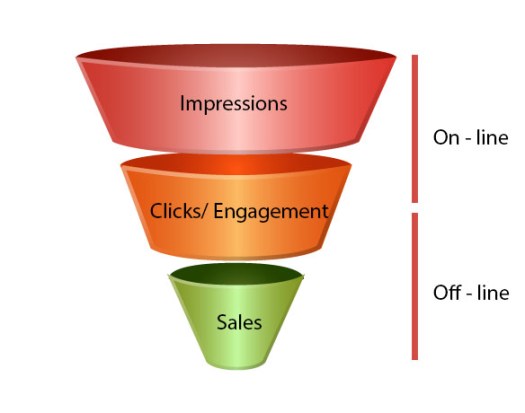
- FMCG Funnel – Companies like Unilever, Nestle or L’Oreal tend to use this funnel on their branding campaigns
3. Direct Sales Oriented Funnels
Industries such as airlines, B2C retailers, NGOs/crowdfunding, retailers, professional services or entertainment companies – tourists packs, Streaming services, adults content and others – are capable to implement a 100% online purchasing focused on driving direct sales.
-
- Digital marketing plans for these industries often aim to drive traffic to purchase product pages, distributor contact pages, or custom research landing pages. (Ex: Lazada Thailand), distributors contact page (EX: Alibaba Thailand) or to custom researches focus on drive traffic to landing pages where where people move from seeing to buying.
- Leads generation may also be included in these funnels. Tracking these funnels is generally simpler since the entire process occurs online.
- Considerations such as cancellations, wrong orders, and stock depletion need to be accounted for to ensure accurate tracking and optimization.
- Example: USD crowdfunding pages have an average CR of 1.5% (Wedidit source)
-
 Amazon, Lazada and big E-commer portals hold a 100% online funnel
Digital Transformation effort to track & optimize: These processes are usually simpler to track (from Digital Transformation perspective) since the whole funnel occurs online.
Nevertheless tracking and optimization processes will have to consider events like ‘cancellation’, ‘wrong orders’ or ‘stock depletion’ or other reasons that may force your business to cancel the order. Once that happens, we’ll be forced to review some of the “sales” counted that need to be reviewed.
Tracking processes of current customers should be easier than those for non-customers, since full online provides may store most of the info needed for future transactions on their ‘Customer profiles’ after they sign-up/
4. Mobile Marketing Funnels: Mobile marketing plans for apps or music services primarily focus on app installs and maintaining active users. These funnels require driving traffic to specific landing pages or app store pages for installations. Keeping users engaged and active is crucial, and inbound marketing plays a significant role in achieving this. Mobile funnels tend to be larger and more challenging to maintain.
-
- Digital activities focused on drive traffic to specific landing pages or straight ahead to App’s stores pages (iTunes or Google Play install page)
- This funnel is longer than usually as you have an extra step: Keep your users active. For this channel is extremely important to provide constant value through Inbound Marketing to keep your community active

Mobile Funnels are the largest and hardest to maintain funnels
- Monitoring the average cost per install closely is essential, as performance can vary based on location and segments. The e-commerce industry in Thailand and Vietnam is around 1 USD and the CR is around 10%, whereas in developing countries, that prices rises to 40 to 50% more Memeapp cho Phien source
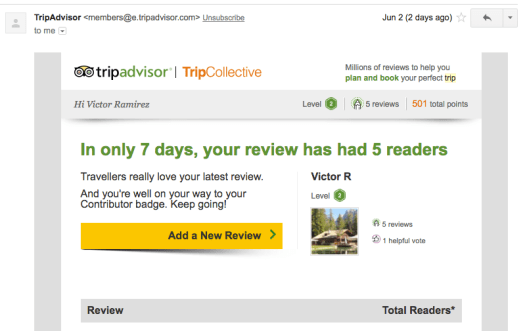
A good example of good mobile funnels is Trip Advisor.
Trip advisor follow their users based on their GPS location and recent researches. When they see that users have moved to other city and have looked for restaurants on the app, they re-approach requesting for reviews. Moreover, they deliver custom reports of how many people viewed their reviews
Digital Transformation effort to track & optimize: These funnels are usually complex since:
Mobile App implementations are always more difficult that Web implementations and will require tailor solutions for Android and iOS, whereas in Web a single solution is easier to reuse.
The app installation may not be the final objective of the investment and other journeys completion may be required.
To sum up
… understanding marketing funnels is crucial for marketers across any industry. By leveraging industry-specific enhancements, such as advanced lead management systems, personalized remarketing, data integration, and mobile optimization strategies, marketers can optimize each level of the user journey and drive better results. Stay informed about emerging trends, conduct thorough research, and adapt your strategies to ever-evolving customer behaviors for continued success.”
User creation and activation may require extra activities like ‘user registration’ or ‘OTP confirmation’ that will increase the complexity of the technical set up.
Overall, the marketing funnel is one of these concepts that every marketer should understand at high level, not only within their industry but also on other third industries.
This knowledge can bring marketers to better partnerships, variants and combinations to optimize each level of the user journey
 A Digital Marketing and Crypto Blog
It’s getting easier reading this way through. Very helpful topic. Cheers
LikeLike